Before the Living Room: When Filmgoing Was an Evening Out
Explore how cinema shifted from a public evening out to home viewing, and see how each setting shaped the rituals and shared attention around a film.
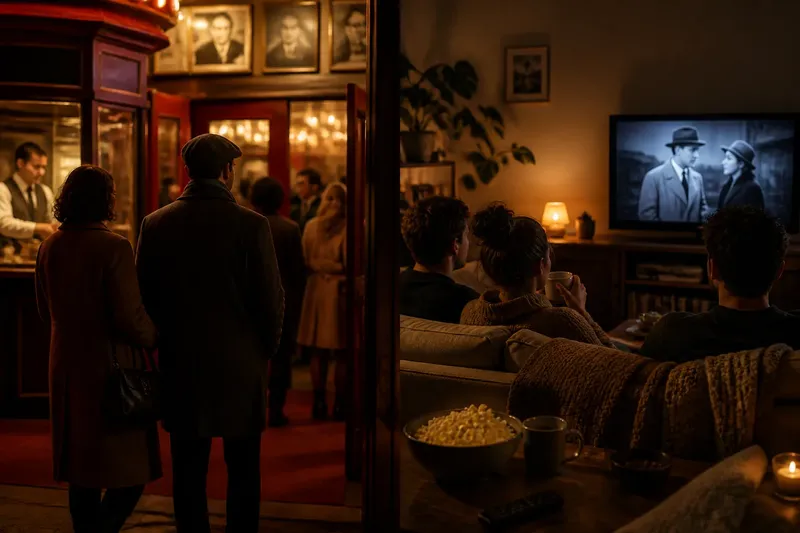
Why did a cinema outing feel like an evening out, while watching at home could happen between dinner and the washing-up? The history of filmgoing is also a history of changing rituals: cinema made watching a public occasion, while home viewing folded it into domestic life.
At a cinema, strangers gathered for a scheduled screening in a room set apart for films. At home, viewers gained control over timing and surroundings, but the screen shared space with ordinary routines. Neither setting made a film meaningful by itself; each shaped how people paid attention and responded together.
The cinema turned a screening into a public outing
A cinema visit began before the film. People left home, travelled to a particular place and entered a building devoted to watching. Meeting at the entrance, buying a ticket or pausing in the lobby gave the evening a sequence that a screen in the sitting room did not provide.
The building helped draw a line between daily life and the film. A ticket counter led to the auditorium; the lights dimmed, and the audience settled into a shared pace. Household tasks could wait outside the room rather than compete for attention beside the screen.
Strangers also became part of the experience. Laughter, a gasp or a held silence moved through the audience without requiring anyone to speak. A viewer could feel part of a response shared with people they would never meet.
This did not mean every cinema visit was grand. A familiar neighbourhood picture house could be part of an ordinary routine. The difference was that watching took place somewhere beyond the home, with a distinct beginning and end.
Home viewing brought the film into domestic life
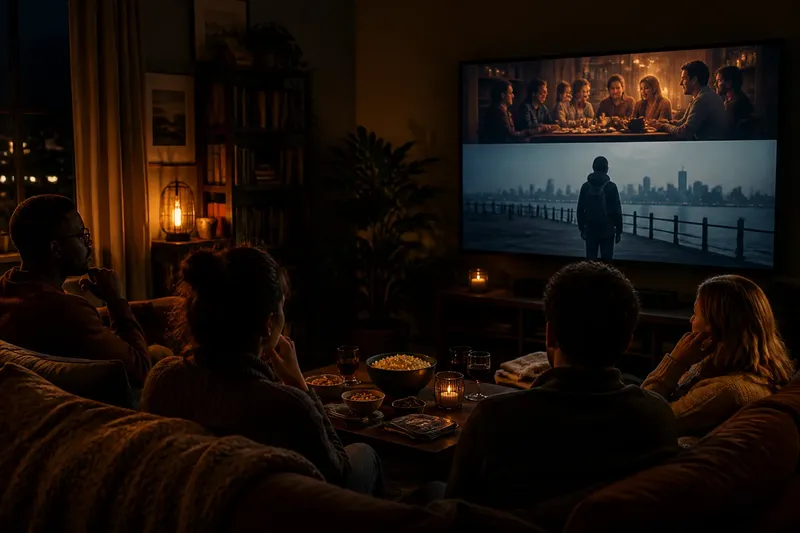
At home, a film entered a room already used for other things. The sofa, kitchen light, telephone and family routines remained close by. Viewers could decide what to set aside, but the boundary between film time and the rest of the day was theirs to make.
Recorded films and later on-demand services made it possible to choose a convenient time, adjust the volume, use subtitles or pause for a late arrival. A scene could be revisited without another trip. That flexibility suited busy households, though it also meant the film had to share the evening with other demands.
The remote control changed the group’s habits as well as its convenience. One person might pause to make tea; another might prefer to keep the story moving. At home, viewers negotiate when to start, whether to talk and which interruptions can wait.
Small domestic signals can mark the transition. Drawing the curtains, bringing tea to the sofa or putting phones aside can help a group settle into watching. These acts need not imitate a cinema; they simply tell everyone that the film has their attention for a while.
Cinema and home viewing offer different kinds of attention
A cinema gives the audience a large shared screen, controlled darkness and a scheduled screening. The room can make a quiet scene feel charged or let a comic moment release through a crowd. Leaving is possible, but pausing the story is not usually part of the arrangement.
Home viewing offers other strengths. A familiar room may feel comfortable for an intimate story, and a group can pause to discuss a confusing moment without disturbing strangers. People can also adjust their surroundings to suit their needs.
It is not worth trying to reproduce every cinema feature at home. Strict silence, elaborate snacks and a completely dark room may suit some viewers and make others uncomfortable. The better choice depends on whether this group wants concentration, conversation, comfort or a mixture.
Convenience changed where people chose to watch
As televisions, recorded films and on-demand services became part of home life, a film no longer required a journey to a cinema. Viewers could fit watching around work, childcare or travel, while cinemas continued to offer scheduled screenings and the atmosphere of a public audience.
The shift was not a clean handover from one setting to another. People continued to choose between cinema and home according to the film, the company and the evening available. A nearby venue and an easy journey might make an outing appealing; a crowded household or a late finish might make home more practical.
Neither setting belongs to one kind of story. A quiet drama can reward a cinema audience’s attention, and a spectacular film can be enjoyable at home. The room changes the conditions in which a story is watched, not what the story is allowed to mean.
Shared viewing does not require a theatre setting
The distinction between a public outing and a domestic ritual is not a ranking. A cinema gives strangers a shared room; home gives a small group more control over comfort, timing and conversation. Both can make watching social, but they ask viewers to share attention in different ways.
Imagine three friends planning to watch a film after dinner. One will arrive late from work, so they agree to wait until that person is settled, keep the main light low and pause only if someone needs to. They let the credits run, then each names one moment that stayed with them. The result is a home evening with a clear start, a shared stretch of watching and a simple opening for conversation—not a copy of a cinema visit.
That distinction also helps explain why cinema history is about more than buildings or screens. The place shaped the gathering, while the people gave the screening its social meaning. Even as films moved into living rooms, viewers kept making small rituals around when to watch and how to be together.